

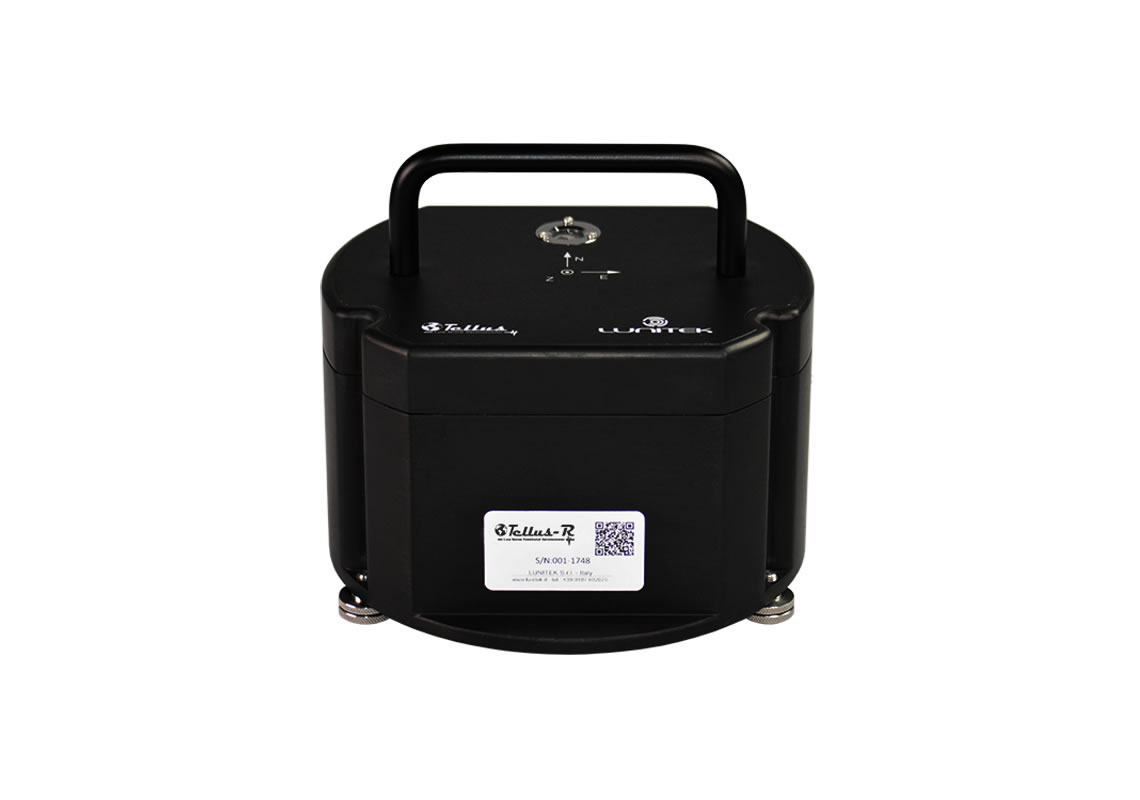
Tellus-R is a rotational seismometer which was conceived for measuring the rotational ground motion.
MODERN SURVEYS
Angular velocimeters are highly valued when constructing modern seismic systems which records all six components of mechanical motion.
HIGHLY PERFORMANT
Tellus-R has high sensitivity for the detection of rotational modes of earthquakes along with a wide dynamic and frequency range. A characteristic feature of the instrument is that it is low noise with a minimal power consumption, which is a significant advantage over electro-mechanical, fiber-optic and other types of rotational motion sensors. Tellus-R comes with a calibration input which allows periodic calibration without the use of expensive dedicated equipment.
ROBUST
Tellus-R comes in a hard coating anodized aluminum housing, IP67 or optionally IP68. It is well suited to harsh environments and is capable of operating at any orientation in space over a wide range of temperatures.

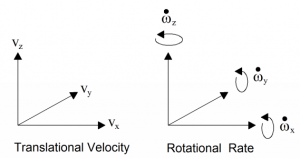 To describe the situation during vibration generated by an earthquake, the general motion of particles or a small volume in a solid body, can be divided into three parts: translation (along the x, y, and z axes), rotation (about the x, y, and z axes), and strain (e.g. Båth, 1979; Teisseyre et al., 2006).